

Your Student Journey
Characteristics of learning
-
1
First, Contact Us via the Online Information Session Form
Please make a reservation for the online information session using the form on this website.
A representative from Shima-Shoku Terakoya (Tsunemitsu) will respond by email.Online Information Session Form
*If you do not receive a reply within one week, please contact the Ama Town Tourism Association:
Tel : 08514-2-0101 -
2
Submit Your Resume
-
3
On-Site Visit & Interview at Shima-Shoku Terakoya
For those considering enrollment after attending an online information session, a visit to the Shima-Shoku Terakoya campus is required.
Typically a 1–2 night stay, during which you can observe classes and production sites, and have interviews with full-time instructors and the program coordinator.Accommodation and transportation on the island will be arranged by the Ama Town Tourism Association according to your budget, so you can relax and enjoy the visit.
-
4
Final Enrollment Decision
We ask that applicants make their final decision regarding enrollment within approximately two weeks after their on-site visit.
Course plans and fees
One-Year Program to Learn Japanese Cuisine Through the Four Seasons
You will learn Japanese cuisine using seasonal ingredients, from the basics of knife skills to hands-on practice in professional kitchens.
 *Total/Year: ¥1,560,000 (Excl. ¥150,000 enrollment fee)
Student Dormitory:
-
Tuition Payment Plan While Working on the Island (2-Year Program)
Students may pay their tuition in two installments if they agree to work at a local business on the island for one year after graduation.
Related Articles -
Internship Program to Gain Experience at Kyoto Cuisine Restaurants After Graduation
After graduation, you move to Kyoto and participate in an internship where you gain experience working at four different types of Kyoto cuisine restaurants over the course of one year to find the style that suits you best.
Related Articles
-
a
What Is Included in Tuition and Admission Fees
Instruction by instructors / Ingredients used in classes / Access to campus facilities / Use of vehicles for curriculum activities
-
b
Expenses Not Covered by Tuition or Admission Fees
- Food and Living Expenses: Most students cook for themselves due to the limited number of restaurants on the island. Average monthly cost is around ¥20,000.
- Three Japanese Knives: Approximately ¥90,000. Students are expected to prepare these before arriving. Other personal items can be purchased cheaply online.
- Moving Expenses
-
Accommodation in a Shared House
Type of Share Houses Women’s Share Houses: 2 houses available
Men’s Share House: 1 house available
Occupancy: About 3 residents per house
Room Setup: Private bedrooms; shared bathroom, kitchen, and toiletStorage Space Each room comes with standard storage, such as a closet or storage room (depending on the room type), along with clear storage cases. -
Items Students Need to Prepare Before Classes Begin
For Use in Campus Classes - Clothing:
-
①White Collared Polo Shirt
②Black Apron (loop-style around the neck)
③Black Chino Pants (can get dirty)
④Black Chef Shoes
⑤Chef Coat Set (jacket and front apron; pants can be the black chinos from item 3)
Notes:
Items 1–3 are used almost daily, so 2–3 sets are recommended.
Item 4: 1 pair is sufficient.
Item 5: Only needed when serving customers at “Remote Island Kitchen Ama,” so 1 set is enough.- Knives:
-
・Usuba (Kansai style): 7 sun (210 mm)
・Yanagiba: 9 sun (270 mm)
・Deba: 6 sun (180 mm)
・Whetstone: #1000 (medium grit)
Notes:
Knives come in different grades, so please choose either Aokou (blue steel) or Shirokou (white steel) according to your budget.
Left-handed students should purchase left-handed knives.For Off-Campus/Field Lessons - Clothing for Extracurricular Classes:
-
①Clothes That Can Get Dirty (waterproof clothing is preferable; a “yakke” set can also be purchased on the island)
②Rubber Boots
③Durable Gloves (stronger than standard work gloves recommended)
④Waterproof Gloves for Handling Fish
Items Needed for Living in the Share House ①Bedding Set You’re Used To (including warm blankets)
②Personal Computer (useful for submitting reports, etc.)
Each room has a small table, but you may bring your own if you prefer. Additional Storage and Equipment
③Basic storage and tools are provided, but if you have many belongings, bring your own.Note:
If you’re unsure about other personal items to bring, please feel free to ask!Transportation on Days Off The island has steep and uneven terrain, making travel by bicycle difficult.
Vehicles owned by Shima-Shoku Terakoya can be rented for a fee.
Bringing your own inexpensive used scooter or compact car will make your stay on the island more convenient and enjoyable. -
Move-In / Class Start Dates
Arrival at Dormitory: March 29 – March 31
Classes Begin: April 1
Note:
Large items can be shipped in advance via Kuroneko Yamato, and they can be placed in your room before arrival. Please consult us beforehand if you plan to do this. -
Moving Procedures
Students are required to register their residence on the island.
After registration, you will receive an “Island Resident Card”, which provides 50% off ferry fares.
Career Paths
-Track Record-
-
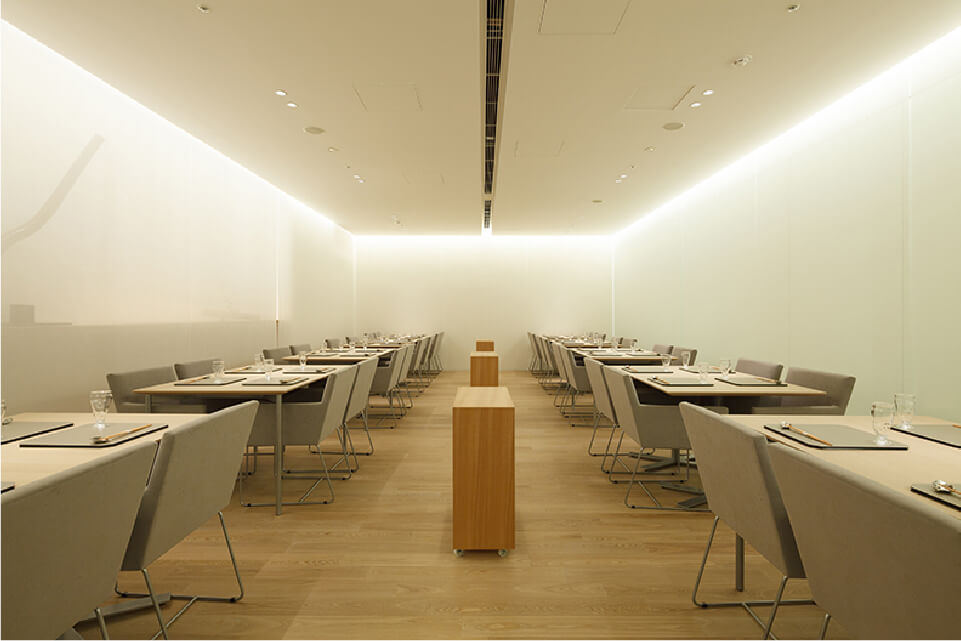
Japanese Cuisine –
Shichi JunikoA traditional Japanese restaurant in the basement of Tokyo Station Hotel, run by Akio Saito, the founder of Shima-Shoku Terakoya. Seasonal delicacies are served in a classic kaiseki style.
-
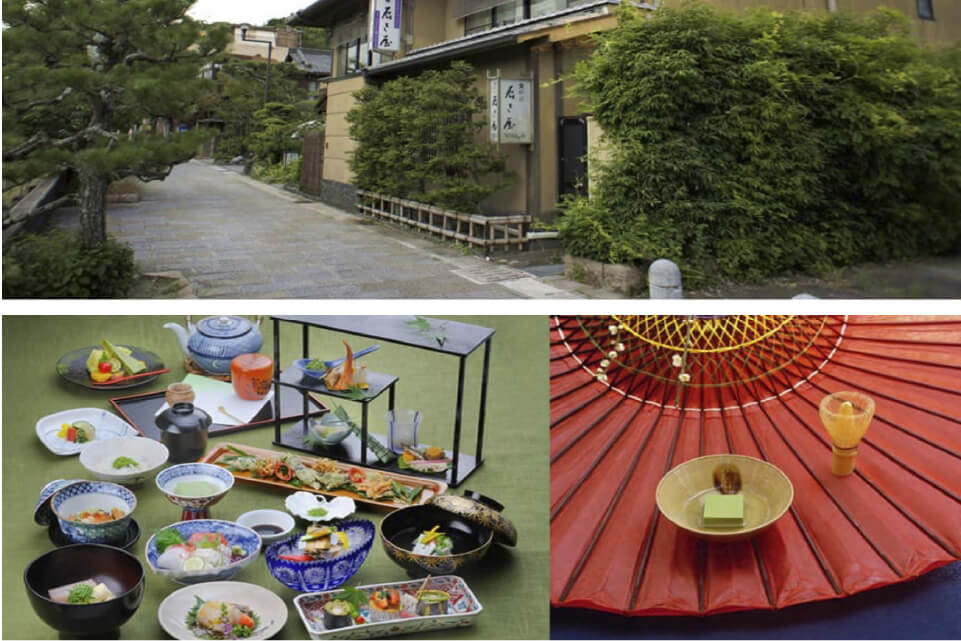
Kyoto Uji –
Matcha Cuisine “Tatsumiya”An old Kyoto restaurant by the Uji River, originating from a tea wholesaler. Offers unique matcha-based dishes along with the elegant scenery of Kyoto’s hidden retreats.
-
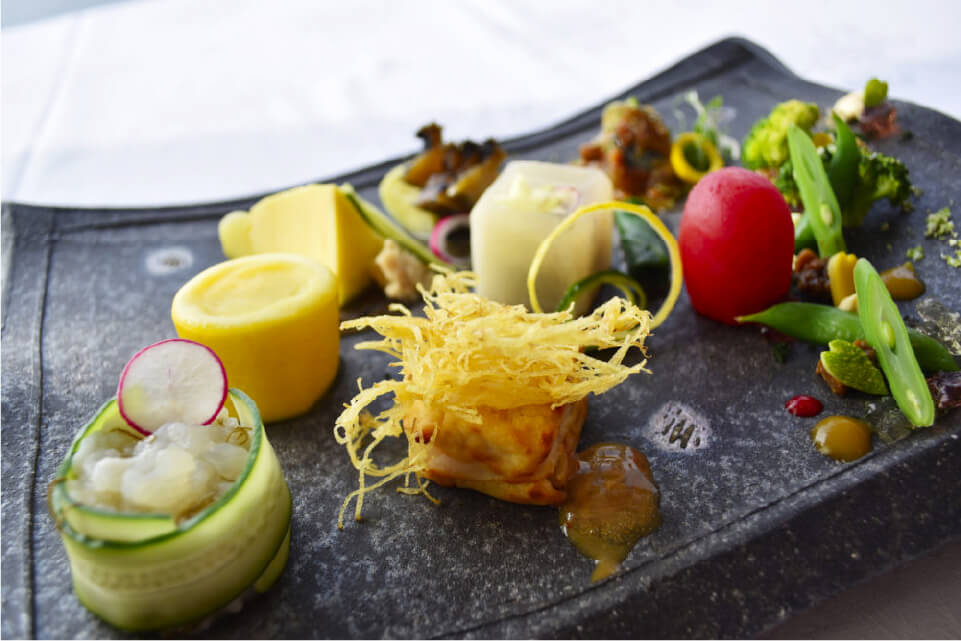
Entô
A geo-park accommodation at the gateway of Ama Town, part of the Oki UNESCO Global Geopark, blending nature, culture, and island hospitality.
-
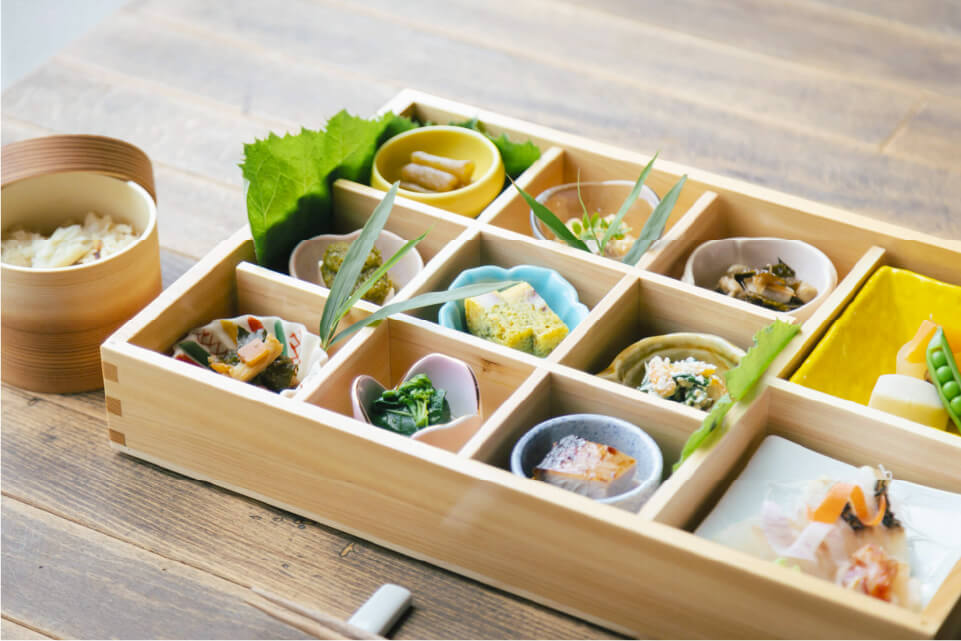
Remote Island Kitchen Ama
Japanese restaurant hosting practical classes for Shima-Shoku Terakoya students. Guests from outside the island are served dishes made exclusively with local island ingredients.

Top